

Transcripts
DR. MAUSETH:
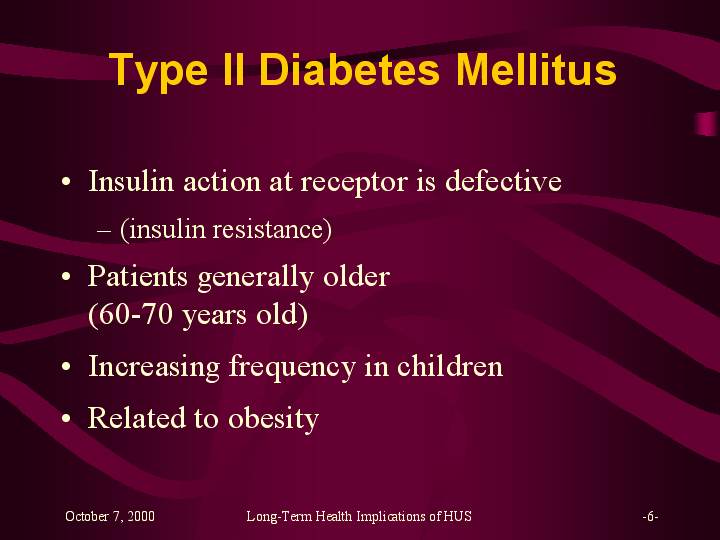
Now, type two diabetes is
where we always get a pediatric endocrinologist.
We get this type two diabetes, and everybody says my
grandmother had diabetes or something like that.
Type two diabetes is relatively infrequent in
children, but it's becoming much more common.
It used to be that you would say nobody has it,
and they were always in type one if
they came as a child, but in minority groups
we're now seeing it's becoming much more common
in Hispanics, blacks and Mexican-American and
Indians.
And as patients, our patients
get more obese. Obesity in the United States
has doubled in the last 13 years in the
pediatric population. And as we start seeing
obesity become more of a problem, this insulin
resistance that goes along with obesity is
becoming a significantly larger problem in the
pediatric groups.
Now, most of these parents that
get type two diabetes where the insulin doesn't
work are older but the major concern that we
have in our age group is this obesity rate here.
These patients can be treated
with exercise. They can be treated with
medicine. They're not insulin deficient to start
with. A lot go on to become insulin deficient
where the islet cells have gotten a lot bigger,
they've grown and eventually they get to where
they may not be able to produce insulin enough
to supply the body. Then they come down with
the frank symptoms.
